
Home / Enterprise Machine Learning Development Services
Move beyond experimental data science notebooks and isolated models. Aurastell engineers the complete machine learning lifecycle—from robust data engineering, automated feature stores, and custom algorithm training to production deployment, MLOps automation, and workflow decision integration.
In the modern enterprise digital ecosystem, companies beginning their Artificial Intelligence journey often face a common hurdle: treating machine learning as a theoretical data science exercise rather than a rigorous software engineering discipline. Too many organizations invest in isolated models with impressive accuracy scores in development notebooks, only to watch them fail when deployed into live production workflows.
Effective Machine Learning Development requires a fundamental shift in focus. While choosing the right algorithm or optimization metric matters, the long-term success of an enterprise ML initiative depends entirely on data engineering discipline, feature consistency, and production operationalization (MLOps). Models do not live in isolation; they must ingest live data streams from enterprise resource planning (ERP) systems, customer relationship management (CRM) portals, and Internet of Things (IoT) sensors, translating predictions into automated business actions.
At Aurastell, our Machine Learning Development practice bridges the gap between raw corporate data and enterprise-grade automation. Guided by production-first engineering standards, centralized feature stores, and automated drift monitoring, we build scalable predictive models that forecast demand, detect financial anomalies, automate document classification, and power spatial digital twins with unwavering reliability.
For organizations beginning their AI journey, establishing a structured machine learning pipeline requires mastery across four critical engineering layers:
Batch/Stream Ingestion Schema Management
Transformations, Centralized Feature Stores, Lineage Tracking
Algorithm Selection, Cross-Validation, PEFT
Decision Integration, Drift Monitoring, Automated Retrain
A robust machine learning system starts with clean, reliable data. We build batch and streaming ingestion pipelines (using Spark, Airflow, and Databricks) that extract raw transactional records from operational databases, ensuring models never run on stale spreadsheets.
Features are the mathematical variables that feed an algorithm. We design versioned, governed feature pipelines that eliminate training-serving skew—the discrepancy between how features are calculated during offline training versus online production inference. Centralized feature stores ensure teams never rebuild the same transformation logic twice.
Rather than applying generic off-the-shelf models, our engineers select and fine-tune algorithms tailored directly to your business decision horizon. Whether utilizing regression models for financial forecasting, tree-based gradient boosting for risk scoring, or deep learning architectures for computer vision, we optimize hyperparameters, execute cross-validation, and enforce strict model explainability (XAI).
Predictions are only valuable when they drive action. We wire model outputs directly into enterprise decision logic, routing workflows automatically while maintaining human review queues for low-confidence thresholds. Continuous MLOps monitoring tracks data and concept drift, triggering automated retraining gates before model performance degrades.
Our ML development practice addresses diverse operational challenges across enterprise verticals:
Primary Algorithms & Methods
ARIMA, Prophet, Gradient Boosting (XGBoost/LightGBM), LSTM Networks
Primary Algorithms & Methods
Random Forests, Support Vector Machines, Logistic Regression, Fine-Tuned LLMs
Primary Algorithms & Methods
Isolation Forests, Autoencoders, One-Class SVMs, Clustering
Primary Algorithms & Methods
Convolutional Neural Networks (CNNs), YOLO, Object Detection Models
To transform experimental data science concepts into stable enterprise software, Aurastell follows a rigorous, six-stage engineering lifecycle:
Defining the target decision metric and evaluating the quality, volume, and schema health of available data sources.
Building automated ETL pipelines and versioned feature extraction scripts to convert raw data into model-ready attributes.
Training custom models using historical datasets, splitting data across rigorous validation folds to prevent overfitting.
Testing models against precision, recall, F1-score, and latency benchmarks while implementing Explainable AI (XAI) transparency.
Packaging models into scalable API containers and wiring predictions directly into enterprise operational workflows.
Deploying automated telemetry to track data drift, versioning model artifacts, and managing controlled retraining gates.
Custom machine learning development delivers measurable operational advantage across key industrial sectors:

The Use Case: Predicting cargo delivery delays, forecasting regional warehouse inventory demands, and automating freight route optimization.
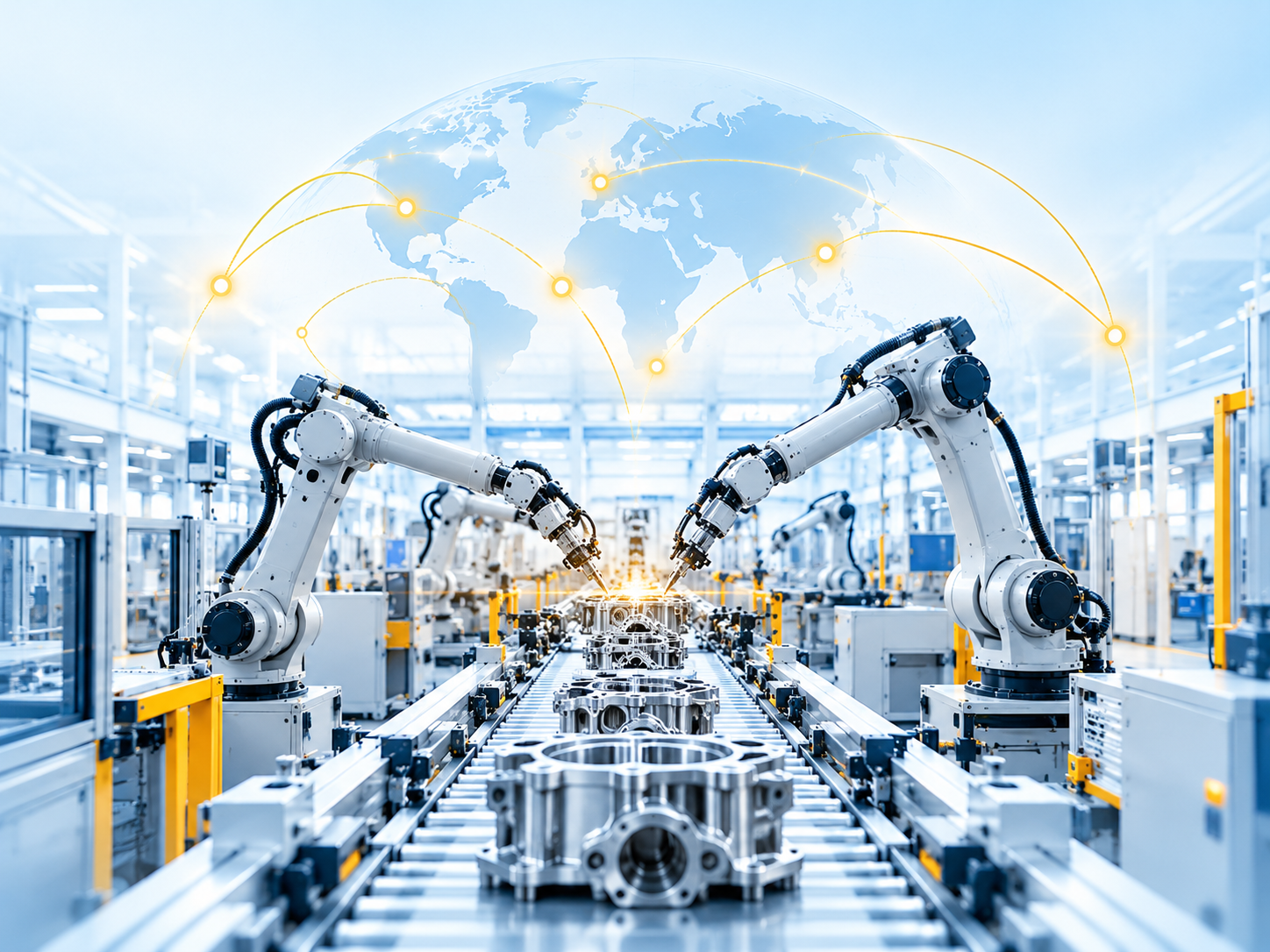
The Use Case: Detecting microscopic assembly line defects and predicting industrial machinery component failures before breakdowns occur.
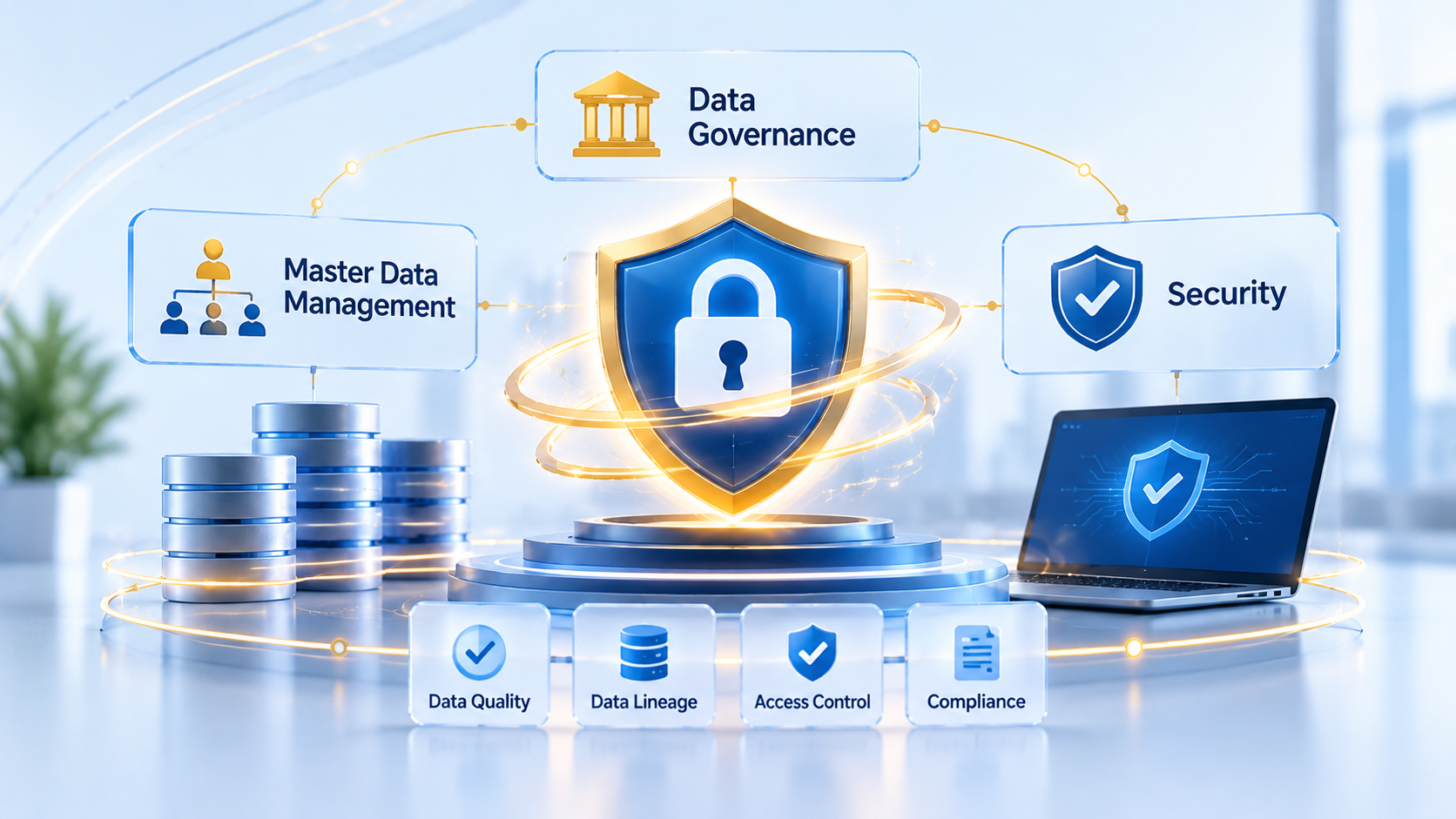
The Use Case: Automating medical claims coding compliance, predicting patient readmission risk, and optimizing drug discovery screening.

The Use Case: Dynamic pricing optimization, customer lifetime value (LTV) prediction, and real-time product recommendation engines.
Organizations beginning their AI journey frequently encounter structural hurdles. Aurastell systematically solves these obstacles:
Operational & Financial Risk
Models built in development notebooks fail in production due to environmental inconsistencies and training-serving skew.
Operational & Financial Risk
Real-world market conditions shift over time, causing silent model accuracy degradation without alerting engineers.
Operational & Financial Risk
Models output static prediction scores or CSV exports that sit in spreadsheets, failing to automate business action.
Operational & Financial Risk
Complex black-box models violate industry regulations (HIPAA, GDPR) because their predictions cannot be audited or explained.
Enterprise leadership selects Aurastell as their machine learning development partner because we deliver complete production systems rather than isolated code handoffs:
Models act directly within your workflows, automating triage, routing, and decision execution.
Architectural data foundations that guarantee 100% feature consistency between development and production.
Automated drift detection, model versioning, rollback capabilities, and secure PII handling protect enterprise integrity.
Most enterprise clients achieve full project cost-parity and positive ROI within 6 to 12 months of production deployment.
A data science prototype is typically a static script or Jupyter notebook that achieves high accuracy on a fixed historical dataset. A production machine learning system is an automated, continuously running engineering architecture that ingests live data from enterprise systems, transforms features consistently, serves predictions via low-latency APIs, monitors for data drift, and triggers automated retraining when necessary.
Training-serving skew occurs when the code or logic used to calculate features during offline model training differs from the logic used during live production inference, causing model accuracy to collapse. Aurastell eliminates skew at the architectural level by deploying centralized feature stores that execute identical transformation code paths for both training and real-time serving.
Machine learning models act as the predictive intelligence layer for a spatial Digital Twin. While the Digital Twin visualizes physical equipment in 3D, integrated machine learning models analyze continuous IoT sensor streams to predict component wear, forecast performance deviations, and highlight impending operational anomalies directly on the 3D visual interface.
We integrate Explainable AI (XAI) frameworks into our model development lifecycle. Using techniques like SHAP (SHapley Additive exPlanations) and feature attribution scoring, our models provide clear, auditable explanations for why a specific prediction was made—ensuring strict compliance with industry regulations (such as HIPAA and GDPR) and building high user trust.
MLOps (Machine Learning Operations) is the set of practices combining machine learning, DevOps, and data engineering to deploy and maintain models in production reliably. MLOps automates model testing, versioning, deployment, and continuous drift monitoring—ensuring your machine learning systems remain accurate and relevant as business conditions evolve.
Security and compliance are engineered natively into our data pipelines. We enforce AES-256 storage encryption, TLS 1.3 network security, Role-Based Access Control (RBAC), data isolation, and automated masking of Personally Identifiable Information (PII) before training datasets reach algorithm development environments.
Algorithm selection is driven by four primary factors:
Project timelines follow a structured, risk-mitigated schedule:
We deploy automated MLOps monitoring tools that continuously compare incoming production data distributions against original training datasets. When statistical drift exceeds established thresholds, the system logs an alert and triggers controlled retraining approval gates, ensuring human engineers review changes before redeployment.
Yes, through Decision Automation. We map model prediction confidence scores to operational rules. High-confidence predictions automatically trigger system actions (such as routing a logistics shipment or approving a standard claim), while low-confidence edge cases are routed to human review queues with complete contextual investigation data.
Our engineering practice is completely platform-agnostic and covers the modern ML stack:
ROI is measured across concrete operational and financial dimensions:
You receive a fully operational production asset, not a notebook:
For companies starting out, we conduct structured AI readiness audits, feasibility studies, and low-risk PoCs. We help internal teams establish their foundational data architecture, select high-impact pilot use cases, and transition smoothly from manual spreadsheets to automated, production-grade machine learning systems.