
Home / Enterprise Immersive Technology Services
Bridge the gap between digital data assets and physical operational environments. Aurastell engineers custom Augmented Reality (AR) and Extended Reality (XR) solutions that overlay real-time enterprise telemetry, spatial digital twins, and guided interactive workflows directly onto frontline operations.
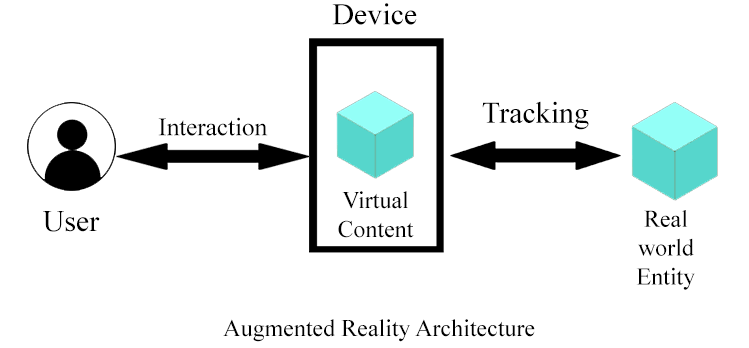
In today's complex enterprise landscape, critical operational data such as IoT telemetry, CAD schematics, supply chain metrics, and diagnostic manuals remains trapped behind 2D screens and isolated mobile interfaces. Frontline field technicians, assembly engineers, surgeons, and logistics staff are forced to repeatedly switch focus between physical tasks and digital screens. This cognitive friction slows execution velocity, increases error rates, and extends training timelines.
Immersive Technology Services driven by Augmented Reality (AR) and Extended Reality (XR) fundamentally transform how human operators interact with enterprise systems. By projecting contextual, spatial information directly onto physical machinery, inventory assets, and patient environments, immersive technologies turn real-world workplaces into interactive, digital-first operational environments.
At Aurastell, our Immersive Technology practice focuses on enterprise-grade AR and spatial XR architectures that deliver measurable, high-ROI business outcomes. Rather than building isolated marketing gadgets, we engineer resilient software integration layers that connect wearable AR headsets, spatial computing devices, and mobile cameras to core enterprise data platforms (ERP, SCM, PLM, and IoT brokers). By anchoring real-time contextual intelligence directly to physical coordinates, we empower frontline teams to execute complex workflows faster, safer, and with unprecedented precision.
Without custom-engineered spatial computing software, enterprises face significant operational friction across field services, manufacturing lines, and training facilities:
Impact on Business Performance
Field technicians lose time stopping work to check paper manuals, flat PDFs, or handheld diagnostic screens.
Impact on Business Performance
Human error during manual multi-step manufacturing or wiring processes leads to costly re-work and scrap material.
Impact on Business Performance
Training new technicians on specialized equipment requires months of shadowing senior staff, draining expert productivity.
Impact on Business Performance
Unresolved machinery breakdowns require flying specialized senior engineers on-site, increasing downtime and travel costs.
Impact on Business Performance
Expensive 3D CAD models and IoT sensor feeds sit idle in office design software, disconnected from physical assets.
Our development practice focuses on blending spatial computing frameworks with core enterprise backend architectures:

We build custom markerless and marker-based AR software applications that overlay critical context onto physical environments using wearable smart glasses, industrial spatial headsets, and enterprise mobile devices.
Combining AR, Mixed Reality (MR), and WebXR into a unified operational platform that adapts smoothly across hardware form factors.
Connecting dispersed frontline teams with remote domain experts through high-definition live video feeds paired with spatially anchored 3D markup tools.
An AR overlay is only as valuable as the underlying data feeding it. We integrate spatial frontends directly into enterprise backends.
Immersive technology delivers transformational value across industries where physical operations, complex spatial machinery, and human expertise intersect:
At Aurastell, our spatial engineering practice adheres to strict operational standards designed to guarantee usability, performance, and long-term enterprise scalability:
We design spatial user interfaces that present only essential, contextual information—preventing visual clutter and operator fatigue during extended wear.
Engineering spatial application backends on open standards (OpenXR, WebXR) so your software investments persist even as smart glasses and headsets evolve.
Utilizing edge processing servers to handle heavy 3D rendering and computer vision tasks, keeping latency below human perception thresholds (sub-20ms) to eliminate motion sickness.
Specific to the project requirements, we implement Zero-Trust encryption (TLS 1.3/AES-256) across video feeds, spatial environment point clouds, and enterprise database calls.
Ensuring critical assembly guides, 3D models, and manuals remain accessible on spatial devices even when working in shielded industrial environments with zero cellular signal.
Our structured engineering methodology guarantees smooth adoption, seamless backend integration, and zero operational disruption:
Evaluating physical operational environments, camera lighting conditions, network bandwidth, CAD asset readiness, and core ERP/IoT integration points.
Converting heavy 3D models into optimized spatial assets and designing intuitive hands-free spatial interaction wireframes.
Developing AR tracking engines, gesture controllers, video streaming bridges, and bidirectional enterprise database connectors.
Conducting hands-on testing on physical factory floors or field sites to validate spatial tracking stability, UI visibility, and operator comfort.
Rolling out initial spatial software pods to select field teams, gathering usability metrics, and refining spatial workflows.
Expanding deployment across global facilities with automated application updates, device management integration, and 24/7 SLA monitoring.
Augmented Reality allows workers to interact with physical machinery, inventory, and clinical environments while receiving real-time digital overlays. Because AR retains physical situational awareness and enables hands-free operation, it is far safer, more practical, and more effective for daily factory assembly, warehouse picking, and field service maintenance than fully occlusive VR headsets.
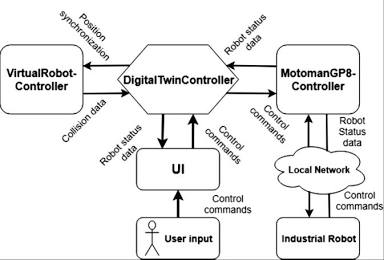
A Digital Twin is a real-time digital replica of a physical asset, system, or process powered by live IoT sensor data. Augmented Reality enhances a Digital Twin by projecting that digital replica and its live performance data (such as temperature, pressure, or historical fault logs) directly onto the physical machine in real time, allowing engineers to diagnose issues visually without looking away from the equipment.
We build secure microservice middleware and REST/GraphQL APIs that connect spatial frontends directly to your backoffice systems (such as SAP, Oracle, PTC Windchill, or AWS IoT). When a field worker points an AR lens at a machine, the spatial software scans the machine's ID, fetches live operational metrics and maintenance records from your enterprise database, and renders them instantly in spatial space.
Custom enterprise AR applications can be deployed across a flexible continuum of hardware:
AR improves First-Time Fix Rates by providing field technicians with step-by-step visual assembly guides, animated 3D diagnostic tools, and live "See-What-I-See" access to remote senior engineers. Technicians no longer guess or rely on outdated manuals, enabling them to resolve complex issues correctly on their first visit.
Markerless tracking utilizes computer vision and SLAM (Simultaneous Localization and Mapping) to recognize physical environment geometries (walls, floor planes, machinery surfaces) without requiring physical QR codes or printed stickers. This enables spatial applications to anchor 3D models and data overlays stably onto complex industrial equipment anywhere in a facility.
Financial ROI is measured across key operational and strategic performance dimensions:
Yes. We build offline-first spatial architectures. Critical 3D CAD assets, step-by-step work instructions, and diagnostic manuals are cached locally on the AR device. When the device reconnects to a network, all field notes, completed checklist data, and operational logs sync automatically back to your central enterprise database.
Spatial interfaces align digital information with physical human spatial memory. By placing contextual instructions directly on top of the physical component being worked on, spatial design eliminates the "cognitive gap"—the mental effort required to translate a 2D diagram on a mobile screen to a 3D physical object—resulting in faster processing, lower mental fatigue, and fewer operational mistakes.
Vision-based AR applications process live camera feeds continuously. We enforce Zero-Trust security protocols: camera image processing and spatial point cloud mapping occur locally on the edge device memory without saving raw video streams to the cloud. All external communication with enterprise databases uses TLS 1.3 encryption, and administrative access requires multi-factor authentication (MFA).
Deployment timelines follow a structured, risk-mitigated schedule:
Industries with high-value physical assets, complex assembly tasks, strict safety requirements, or geographically dispersed field teams benefit most—including Manufacturing, Automotive, Logistics & Warehousing, Healthcare & Medical Devices, Aerospace, Energy & Utilities, and High-End Retail.
Spatial computing acts as a force multiplier for expert talent. Through remote "See-What-I-See" AR collaboration, a single senior engineer based at headquarters can guide multiple junior technicians through complex repairs across different global facilities simultaneously, ensuring operational continuity without requiring international travel.
Bridge the gap between digital data assets and physical operational environments. Aurastell engineers custom Augmented Reality (AR) and Extended Reality (XR) solutions that overlay real-time enterprise telemetry, spatial digital twins, and guided interactive workflows directly onto frontline operations.