
Home / Enterprise Data Analytics Services
Unify fragmented data architectures, automate high-speed ingestion pipelines, and empower your enterprise with real-time analytics, robust data governance, and actionable business intelligence.

Modern enterprises operate in data-rich environments, yet many struggle to extract timely, reliable intelligence from their digital assets. As applications, transaction systems, third-party platforms, and operational tools proliferate, data becomes trapped in fragmented silos. Disconnected spreadsheets, delayed batch reporting, and inconsistent metrics create decision latency and weaken competitive advantage.
Aurastell’s Data Analytics Services bridge the gap between complex data ecosystems and high-impact business outcomes. We partner with midsize and enterprise-grade organizations to build scalable data foundations, modern data warehouses, automated pipeline architectures, and intuitive analytics dashboards. By replacing fragile data handoffs with resilient, automated software pipelines, we ensure your leadership teams act on a single, verified source of operational truth.
Without an engineered data strategy, organizations face rising infrastructure costs, compliance risks, and slow reporting cycles. We address the core data bottlenecks holding enterprises back:
Impact on Business Operations
Key metrics are isolated across ERP, CRM, and line-of-business applications, preventing unified visibility.
Impact on Business Operations
Legacy batch updates mean business reports reflect past performance rather than real-time conditions.
Impact on Business Operations
Conflicting definitions and manual data entries lead to inaccurate analytics and lost executive trust.
Impact on Business Operations
Inefficient query structures and unoptimized database schemas inflate cloud compute and storage expenses.
Impact on Business Operations
Ungoverned data access creates compliance risks under global data privacy standards.
Our data practice spans the complete lifecycle of enterprise data management, from raw ingestion to sophisticated visual intelligence:
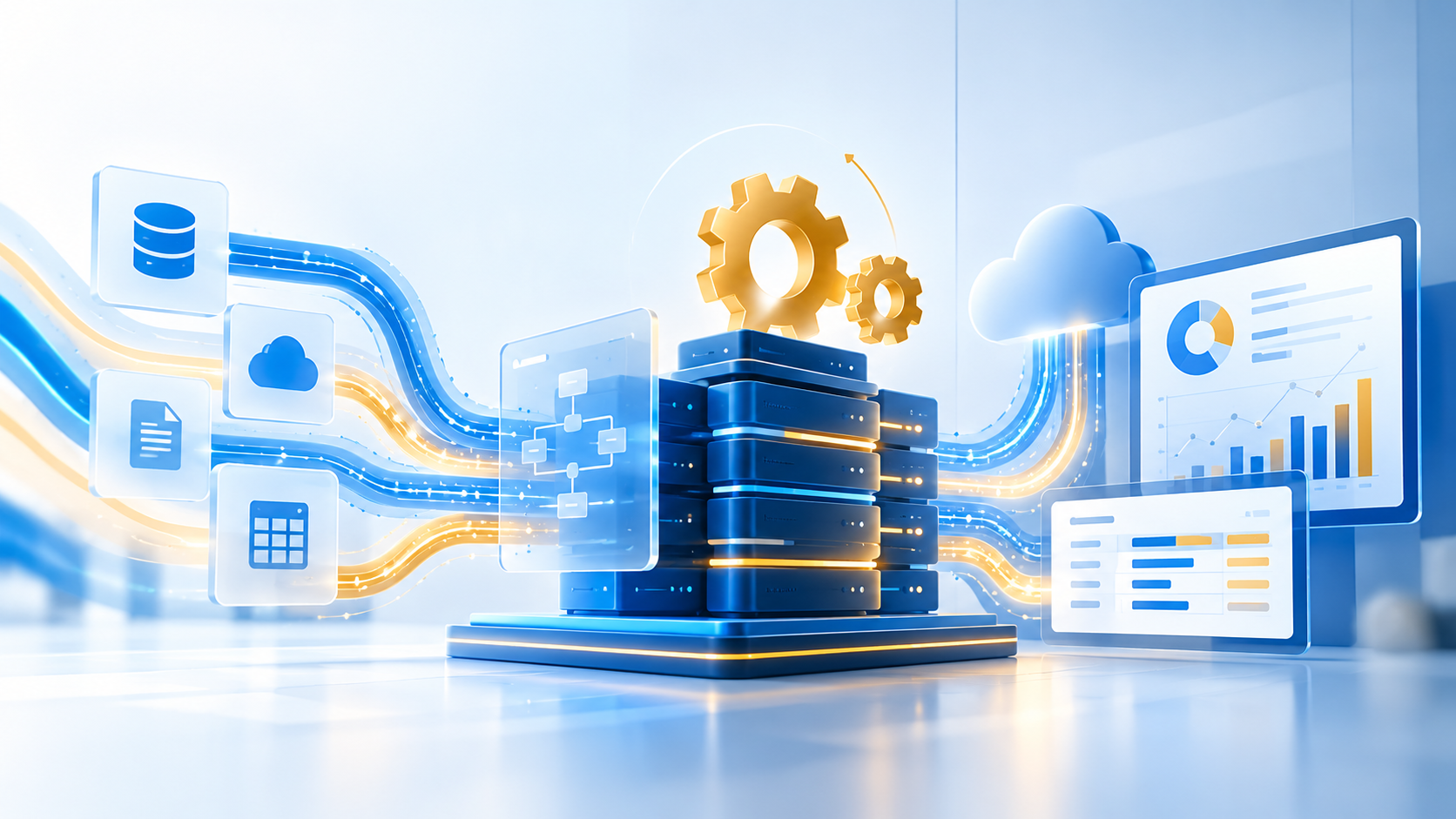
Raw data is only valuable when delivered reliably and accurately. We engineer robust ETL (Extract, Transform, Load) and ELT pipelines that automate data extraction across disparate enterprise databases, APIs, and file systems.
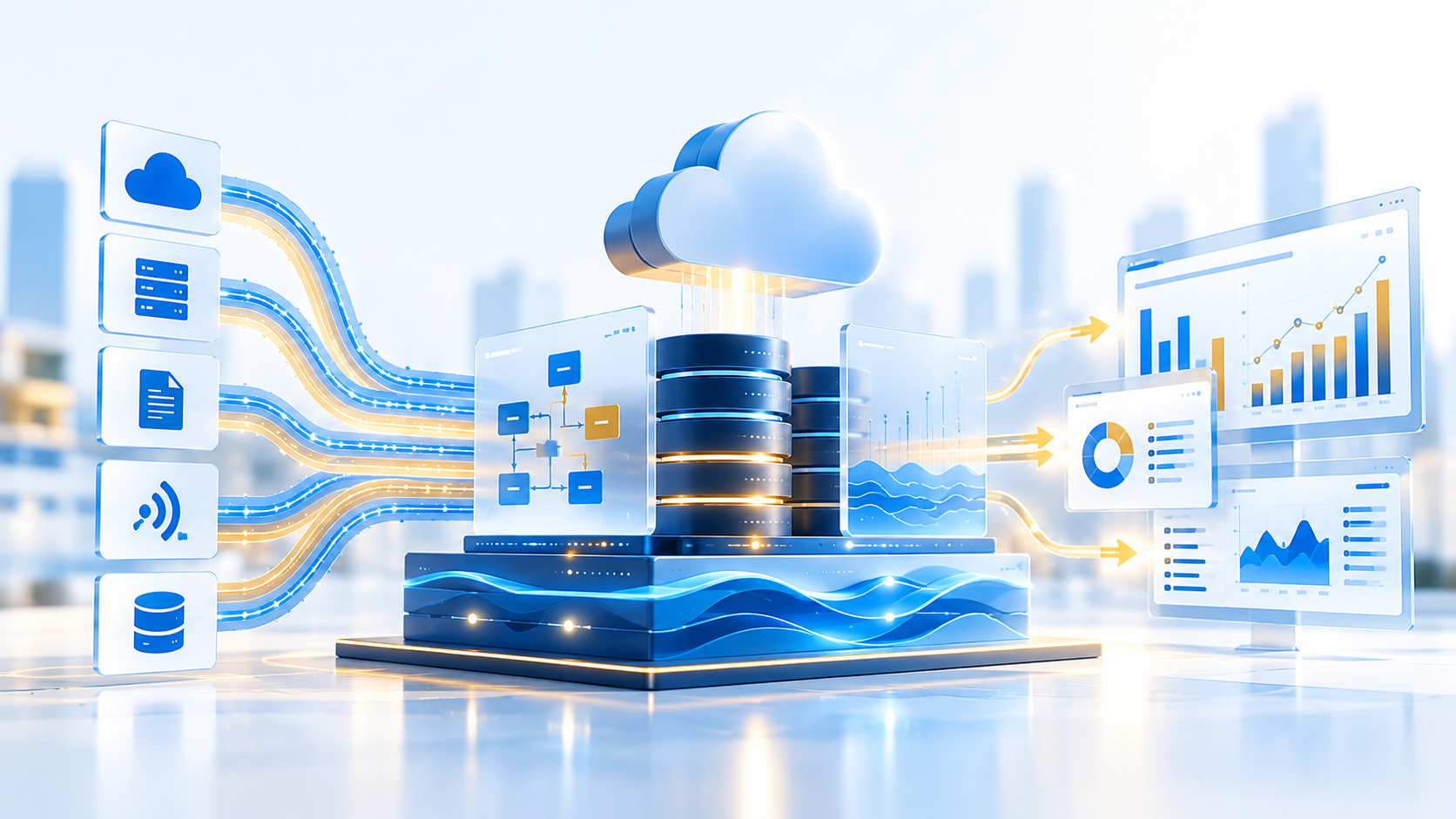
We design and deploy modern data storage architectures optimized for fast query execution, concurrency, and cost management.
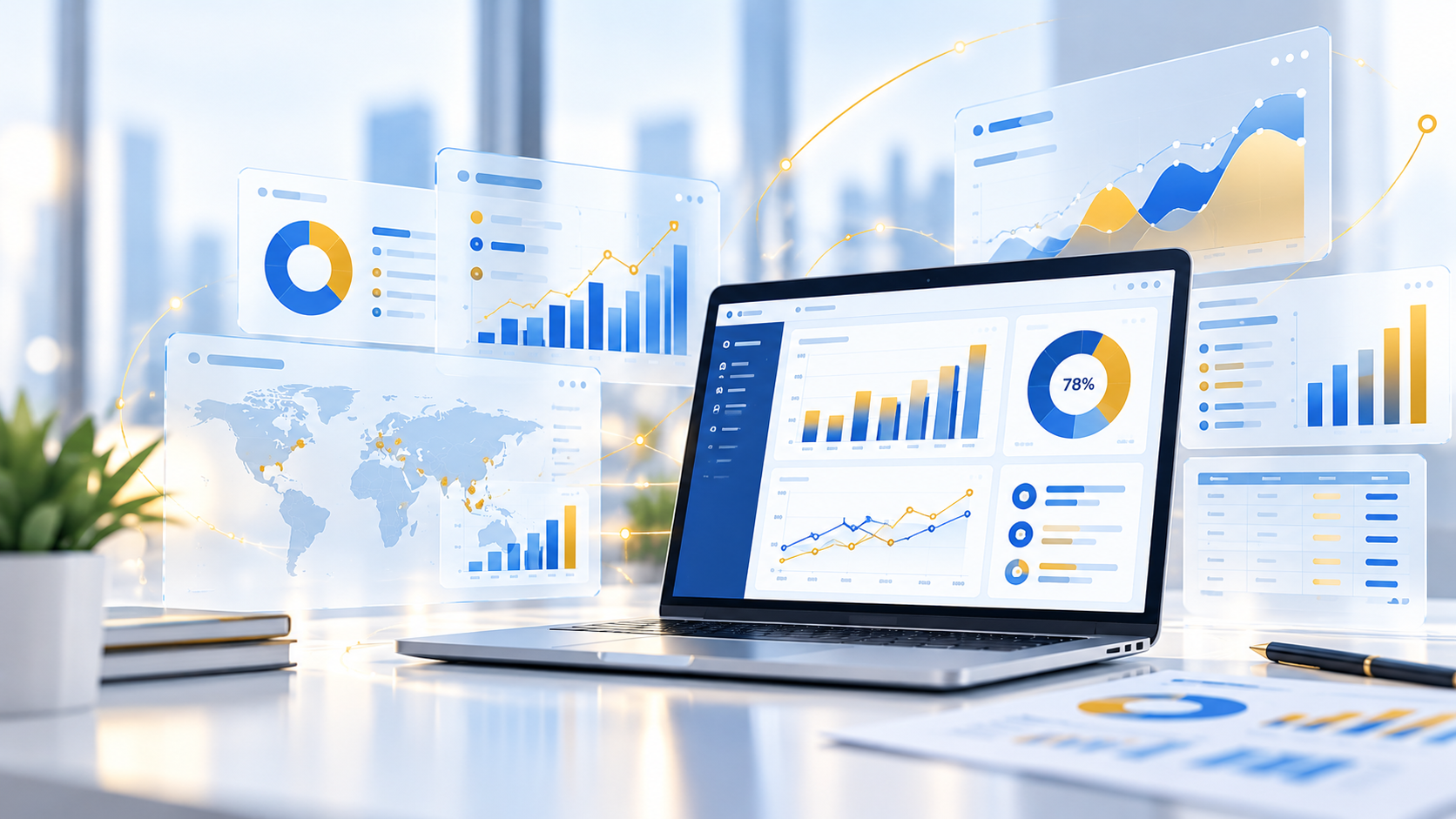
Transform complex data models into clear, actionable executive dashboards and operational portals.
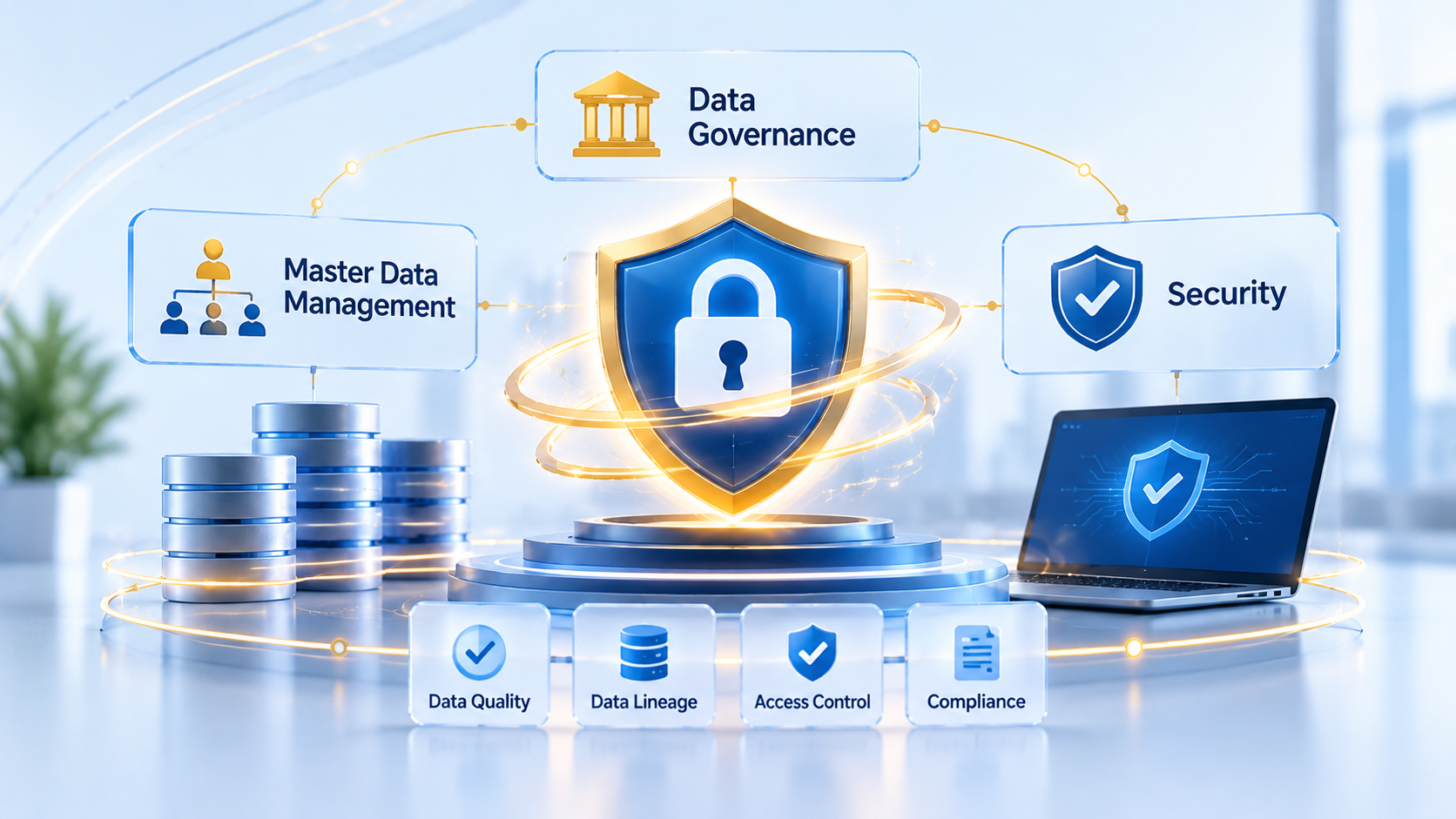
Data governance ensures that enterprise data remains secure, compliant, and accurate across every business unit.
Our structured methodology mitigates delivery risk and guarantees zero operational disruption during deployment:
Evaluating your existing data sources, database schemas, network constraints, reporting requirements, and compliance boundaries.
Defining target data structures, canonical schemas, integration contracts, and security access policies.
Engineering automated extraction scripts, transformation jobs, storage schemas, and semantic reporting layers.
Executing reconciliation tests, load simulations, and query response benchmarking under peak concurrent usage.
Deploying data pipelines using blue-green environments to ensure continuous uptime and seamless parallel testing.
Implementing real-time monitoring tools to track pipeline health, query latencies, data drift, and operational SLA adherence.
We align our delivery structure with your organization’s technical maturity and internal governance models:
Dedicated cross-functional teams (Data Architects, Data Engineers, BI Developers, QA Specialists) leading end-to-end data transformation projects.
Senior data architects integrated into your IT leadership team to guide platform selection, query optimization, and governance strategies.
SLA-backed 24/7 infrastructure monitoring, pipeline maintenance, schema updating, and continuous performance tuning.
A traditional Data Warehouse is optimized for structured, transactional data with fixed schemas, ideal for fast SQL reporting. A Data Lakehouse combines the structure and ACID compliance of a warehouse with the low-cost storage and flexibility of a data lake, allowing structured, semi-structured, and unstructured data to coexist for both BI and advanced data science workloads.
We build centralized data ingestion pipelines and unified semantic layers that pull data out of isolated applications. By mapping disparate formats into standardized enterprise schemas, we create a single, synchronized source of truth across all business units.
In traditional ETL, data is transformed on an external server before being loaded into a database. In modern ELT (Extract, Load, Transform), raw data is loaded directly into modern high-performance cloud databases first and transformed in-place. This speeds up ingestion, preserves raw historical data, and simplifies pipeline maintenance.
We implement automated data quality gates directly within the pipeline architecture. These gates run schema validation, null checks, range tests, and duplicate detection prior to updating analytics tables. Any anomalous data is routed to isolation queues for review without stopping the broader pipeline.
Yes. We design and deploy embedded analytics interfaces using REST APIs and custom web components. This enables your internal teams or external clients to interact with real-time reports securely inside your existing software applications.
We embed security natively into every pipeline tier. This includes applying AES-256 encryption for data at rest, TLS 1.3 for data in transit, Role-Based Access Control (RBAC), row/column-level security, data masking for PII, and automated logging of all data access queries.
Our engineers work across modern enterprise data stacks:
Batch processing collects and transforms operational data at scheduled intervals (e.g., hourly or daily). Real-time streaming processes event payloads asynchronously as they occur (using tools like Apache Kafka), enabling instant alert generation and immediate decision-making for time-critical workflows.
Analytical queries are never run directly against operational production databases. We isolate reporting workloads by extracting operational data asynchronously via Change Data Capture (CDC) or read-replicas into dedicated analytical storage layers engineered specifically for heavy query loads.
Master Data Management establishes a single, consistent set of definitions and records for core business entities (such as customers, products, or suppliers) across multiple enterprise tools. Without MDM, different departments use conflicting definitions, resulting in inaccurate consolidated reporting.
We deploy decoupled pipeline architectures with persistent messaging queues and staging environments. If an underlying database undergoes maintenance or upgrade, incoming data updates are safely buffered in the queuing layer and ingested automatically once the destination system returns online, ensuring zero data loss.
Focused pipeline builds or single-subject data warehouse modernizations typically deliver actionable dashboards within 6 to 10 weeks. Comprehensive enterprise-wide data transformations are executed in structured, phased milestones over 12 to 16 weeks. Most clients achieve cost parity and positive ROI within 12 to 18 months through automated reporting workflows, reduced cloud query costs, and faster operational decision cycles.