
Home / Enterprise AI Engineering Services
Transition from isolated proof-of-concepts and desktop AI experiments to resilient, secure, and enterprise-grade AI platforms. Aurastell delivers full-stack AI platform engineering, agentic orchestration frameworks, custom Large Language Model (LLM) fine-tuning, and automated MLOps—ensuring zero data leakage, sub-second latency, and measurable operational ROI.
In the rapidly evolving landscape of enterprise technology, organizations across logistics, manufacturing, healthcare, automotive, and retail have recognized the transformative power of Artificial Intelligence. Executives are eager to deploy Generative AI, Retrieval-Augmented Generation (RAG) platforms, decision intelligence engines, and autonomous agentic workflows. However, the majority of enterprise AI initiatives encounter a critical roadblock: the inability to scale beyond experimental proof-of-concepts (PoCs).
Building an impressive AI demo in a sandbox environment requires minimal effort. Industrializing that same AI capability into a production system—capable of handling millions of concurrent API calls, adhering to strict corporate data governance, maintaining sub-second query latency, and operating with guaranteed financial return on investment (ROI)—requires rigorous Enterprise AI Engineering.
Enterprise AI Engineering is the specialized discipline that unifies software engineering standards, cloud data architectures, custom model development, and continuous operational governance (MLOps/LLMOps). It replaces fragile, custom-scripted AI prototypes with elastic, modular, and cloud-agnostic AI platforms.
At Aurastell, our Enterprise AI Engineering Practice bridges the gap between raw AI research and enterprise operational execution. We partner with mid-market and global enterprises to engineer resilient platform foundations, build autonomous multi-agent systems, enforce zero-trust security guardrails, and optimize token/compute economics. Guided by platform-agnostic architectures and production-first engineering standards, we ensure your enterprise AI investment delivers predictable, decision-grade business value.
To industrialize AI across an organization, technology leadership must build a resilient platform across four foundational engineering layers:
Event Ingestion, CDC, Vector Stores, Features
Fine-Tuning, Multi-Agent Frameworks, Tool Calling
Zero-Trust PII Redaction, RBAC, Hallucination Gates
Model Observability, Drift, Token/Compute Governance
AI models are only as effective as the data pipelines feeding them. We build streaming event pipelines (Kafka, EventBridge), real-time Change Data Capture (CDC) connectors, centralized feature stores, and vector database indexing engines (Milvus, Pinecone, Qdrant) that provide contextual, low-latency data feeds to AI models.
Moving beyond static prompts, we build custom model architectures, fine-tune open-source models (Llama 3, Mistral) using Parameter-Efficient Fine-Tuning (PEFT/QLoRA), and deploy multi-agent orchestration frameworks (LangGraph, AutoGen, CrewAI). These autonomous agents reason, decompose tasks, query backend APIs (SAP, Salesforce), and execute complex business workflows independently.
Protecting corporate intellectual property and maintaining compliance (ISO 27001, SOC 2, GDPR, HIPAA) is non-negotiable. We engineer inline Personally Identifiable Information (PII) masking, prompt injection defenses, hallucination verification gates, and Role-Based Access Control (RBAC) into the API gateway layer.
Uncontrolled AI compute and token calls can cause severe cost inflation. We deploy continuous telemetry dashboards (Datadog, MLflow, Monte Carlo) to track model latency, data drift, and accuracy decay—while implementing semantic response caching (Redis) and auto-suspending compute clusters to lower operating expenses by 35% to 50%.
Our practice addresses the complete engineering lifecycle required to deploy intelligent, autonomous applications:
Engineering Focus & Technical Execution
Multi-modal document parsing, semantic chunking, dense vector embedding, hybrid search retrieval APIs.
Engineering Focus & Technical Execution
Multi-agent collaboration frameworks, custom tool-calling interfaces, human-in-the-loop (HITL) approval gates.
Engineering Focus & Technical Execution
Domain vocabulary adaptation, PEFT/LoRA weight adjustments, Q4/Q8 model quantization for edge deployment.
Engineering Focus & Technical Execution
Edge microchip model optimization (TensorRT, ONNX), RTSP camera stream processing, 3D Digital Twin sync.
Engineering Focus & Technical Execution
Prompt token compression, semantic query caching, dynamic multi-model routing, automated drift gates.
To transition AI applications from conceptual design to scalable production infrastructure, Aurastell follows a structured, six-stage engineering delivery framework:
Evaluating enterprise data ecosystems, API readiness, security perimeters, and target business KPIs to establish a clear production roadmap.
Engineering real-time CDC streams, document parsing pipelines, centralized feature stores, and vector database structures.
Selecting foundation models, executing PEFT/LoRA domain adaptation, and optimizing model weights for throughput and latency.
Developing autonomous agent workflows, establishing bi-directional software API integration, and configuring human-in-the-loop approval checkpoints.
Deploying inline PII masking, prompt injection defenses, automated fact-verification layers, and RBAC policies.
Implementing real-time monitoring dashboards to track token consumption, query latency, data drift, and agent task execution rates.
Custom Enterprise AI Engineering delivers measurable operational advantages across key enterprise verticals:

The Engineering Challenge: A freight forwarding leader needed to automate the processing of chaotic customs documents and coordinate multi-carrier exception handling.
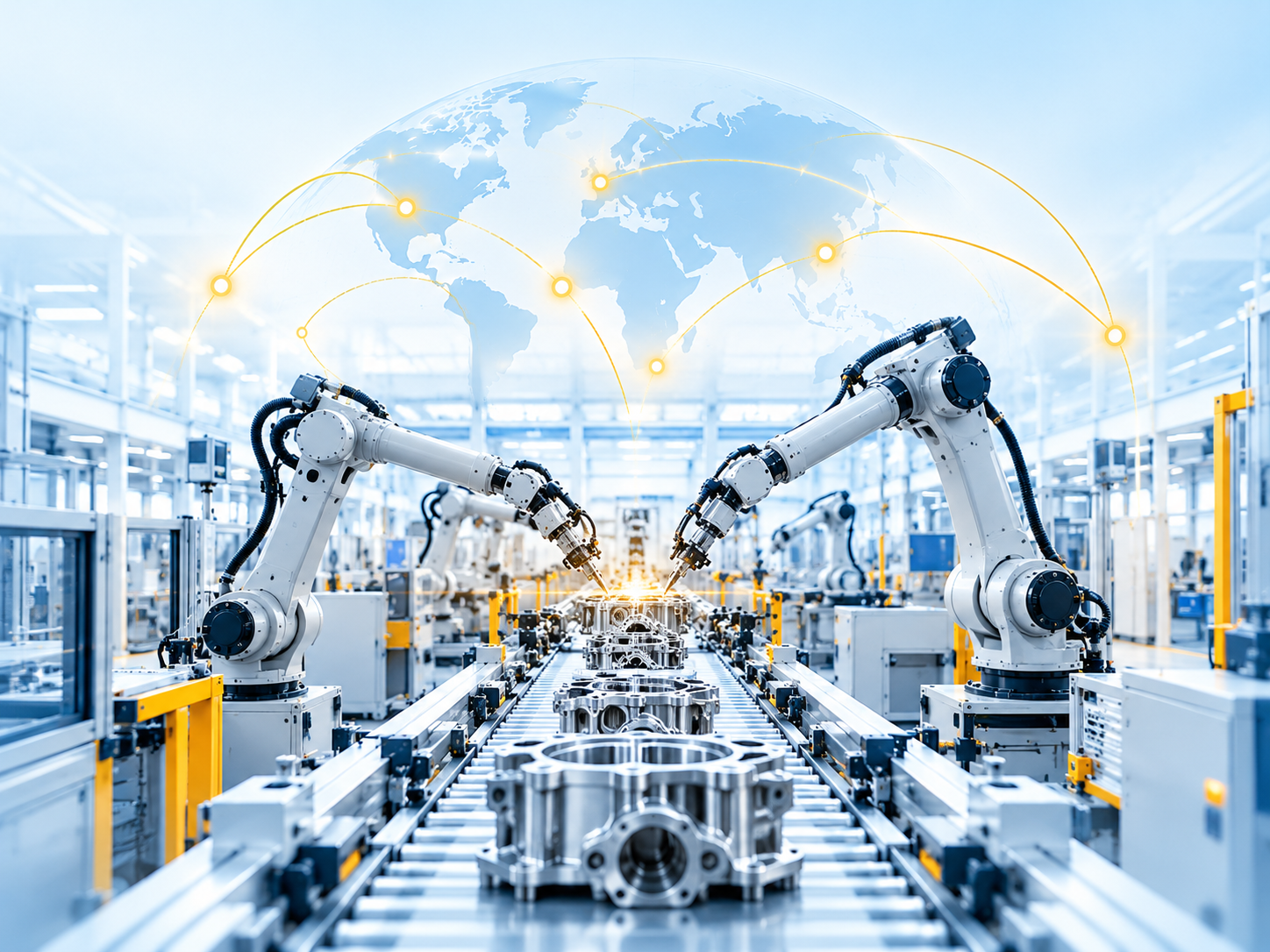
The Engineering Challenge: An industrial equipment manufacturer required real-time quality auditing on factory floors and instant technician repair guidance.
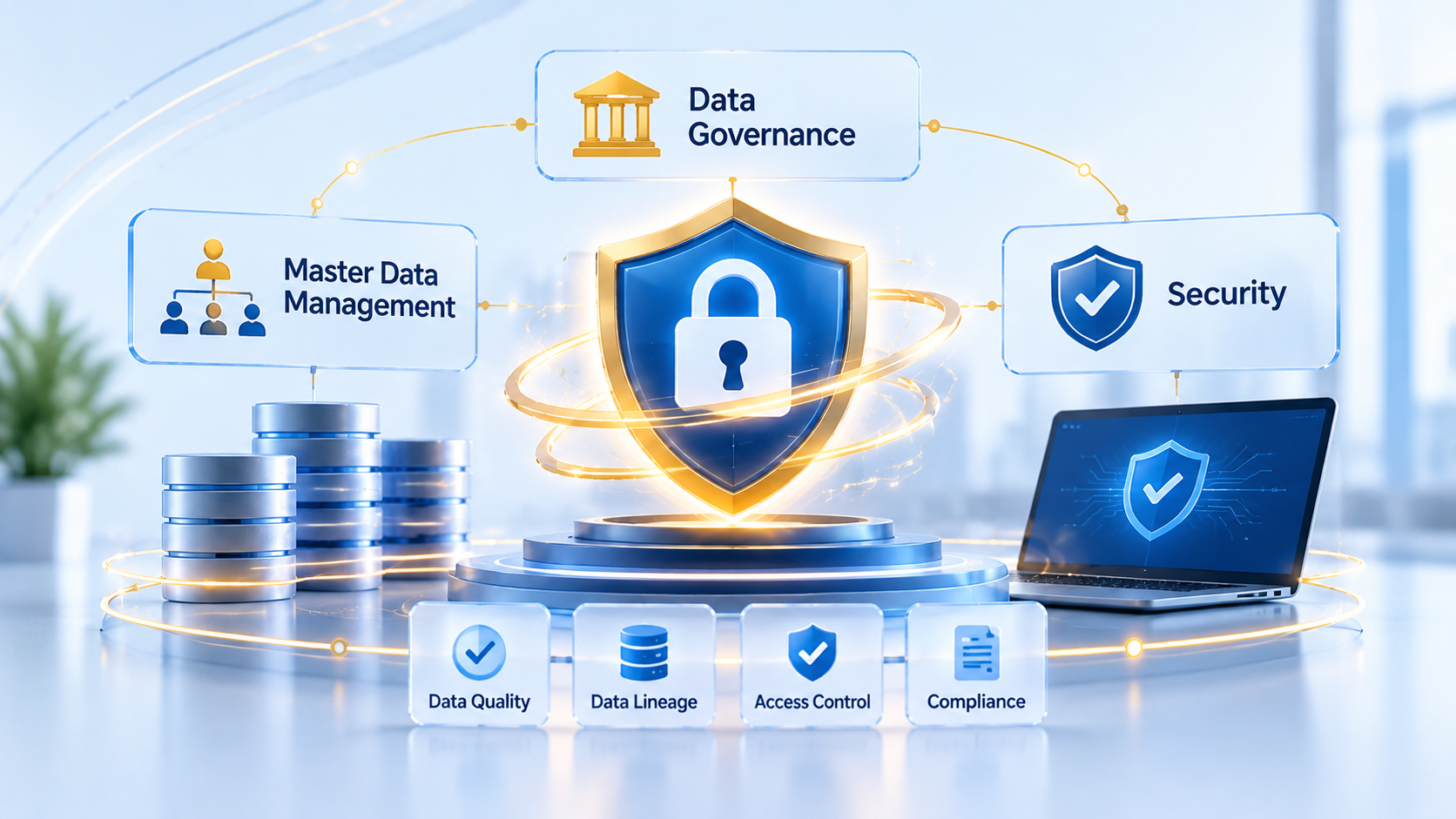
The Engineering Challenge: A healthcare network needed to summarize patient records and automate medical coding compliance without violating HIPAA regulations.

The Engineering Challenge: A retail brand required real-time personalized shopping concierges capable of checking live inventory and executing orders automatically.
Enterprise technology leaders face severe structural obstacles when attempting to scale AI across their organizations. Aurastell systematically eliminates these hurdles:
Commercial & Operational Risk
AI projects remain stuck as desktop prototypes because they lack production API connectors, scalability, and security.
Commercial & Operational Risk
AI models generate plausible but incorrect statements, introducing severe legal, financial, and operational liabilities.
Commercial & Operational Risk
Employees paste confidential business data, code, or customer PII into public LLM tools, risking major data leaks.
Commercial & Operational Risk
Scale-out AI usage generates ballooning cloud invoices due to unoptimized context windows and heavy LLM API calls.
Commercial & Operational Risk
Production AI models degrade over time as real-world market conditions and data distributions shift away from training data.
Enterprise leadership selects Aurastell as their AI engineering partner because we replace experimental uncertainty with predictable software engineering discipline:
Pre-built AI platform components, vector storage connectors, and agent templates accelerate delivery.
Token optimization, semantic query caching, and dynamic model routing keep operating costs predictable.
Zero-trust security, mTLS encryption, and private cloud deployment ensure your corporate data remains entirely your asset.
Built-in ISO 27001, SOC 2, HIPAA, and GDPR compliance guardrails with automated audit logging.
Data Science focuses on statistical analysis, data exploration, and building predictive models in sandbox environments (like Jupyter notebooks). Enterprise AI Engineering is the software engineering discipline that takes those models and builds the scalable infrastructure, data pipelines, API gateways, security guardrails, and MLOps automation required to run AI reliably in high-volume production environments.
A standard GenAI chatbot passively answers user questions in a conversational interface. An Autonomous AI Agent can reason, decompose a high-level business goal into multi-step execution plans, select and call external backend software APIs (such as ERP or CRM systems), execute software actions, and complete complex operational workflows independently.
RAG is an architectural framework that connects an AI foundation model to an organization’s private, internal data stores. When a query is made, RAG searches vector databases for relevant document chunks and appends them to the prompt. This ensures the AI model generates accurate, citation-backed answers grounded in verified corporate data, eliminating hallucinations.
We enforce strict Zero-Trust data privacy boundaries. When utilizing cloud models (such as AWS Bedrock or Azure OpenAI), we deploy enterprise tenants with zero-data-retention agreements—ensuring your data is never used to train public models. For maximum security, we deploy open-source models (like Llama 3) directly inside your private cloud perimeter.
We apply a multi-layered guardrail strategy:
A Feature Store is a centralized repository that stores, versions, and serves curated data attributes (features) used to train machine learning models and feed online inference engines. It eliminates training-serving skew by ensuring that feature values used during model training match the exact feature values served during real-time production inference.
Enterprise AI acts as the predictive intelligence layer for a spatial Digital Twin. While the Digital Twin visualizes physical equipment in 3D, integrated AI algorithms analyze continuous IoT sensor streams to predict component failure, forecast performance anomalies, and highlight operational risks directly on the 3D visual interface in real time.
We implement strict cloud cost governance frameworks:
PEFT/QLoRA is an advanced fine-tuning technique that adapts open-source foundation models by updating only a tiny fraction of their parameters. This allows enterprises to customize AI models for specialized domain terminology or tone at a fraction of the compute cost and memory footprint of full model training.
Security is engineered natively into every platform layer:
Development follows a structured, risk-mitigated schedule:
Our engineering practice is platform-agnostic and covers the modern enterprise AI stack:
We calculate ROI across concrete financial and operational metrics:
You receive a production-grade enterprise platform asset: